


Price
Domestic learners
$2,494* per 30 point course
*Fees outlined are based on the 2026 fee schedule and are subject to revision each year. Prices include GST where applicable. Non-tuition fees, such as the Student Services Levy (SSL), will also apply.
Qualification
PGDipNurs
120 points
Duration
2 years part-time
Start dates
22 February 2027
19 July 2027
February 2028
July 2028
2027 applications open now, apply early to secure your place.
Delivery
Study online, with up to 8 in-person days required during the programme (at UC's Christchurch campus)
Overview
Learn online from anywhere in Aotearoa New Zealand, combined with up to 8 days onsite in Ōtautahi Christchurch.
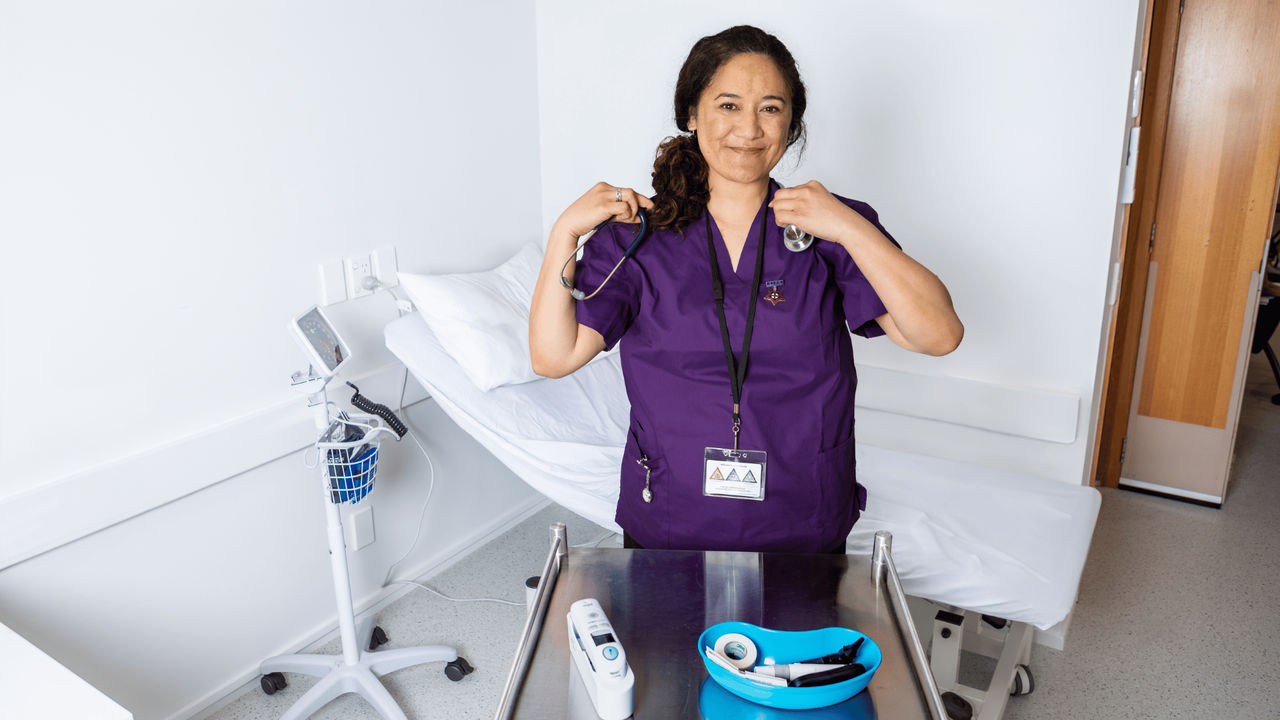
Are you a registered nurse looking to advance your career and lead positive change? Upskill through flexible online study supported with face to face learning onsite in Ōtautahi Christchurch. You'll become a registered nurse prescriber in just two years of part-time study.
The Postgraduate Diploma in Nursing (Registered Nurse Prescriber) is designed to equip you with the competencies to apply for registration as a registered nurse prescriber in your area of practice. We recommend all applicants carefully review the Nursing Council of New Zealand requirements before applying.
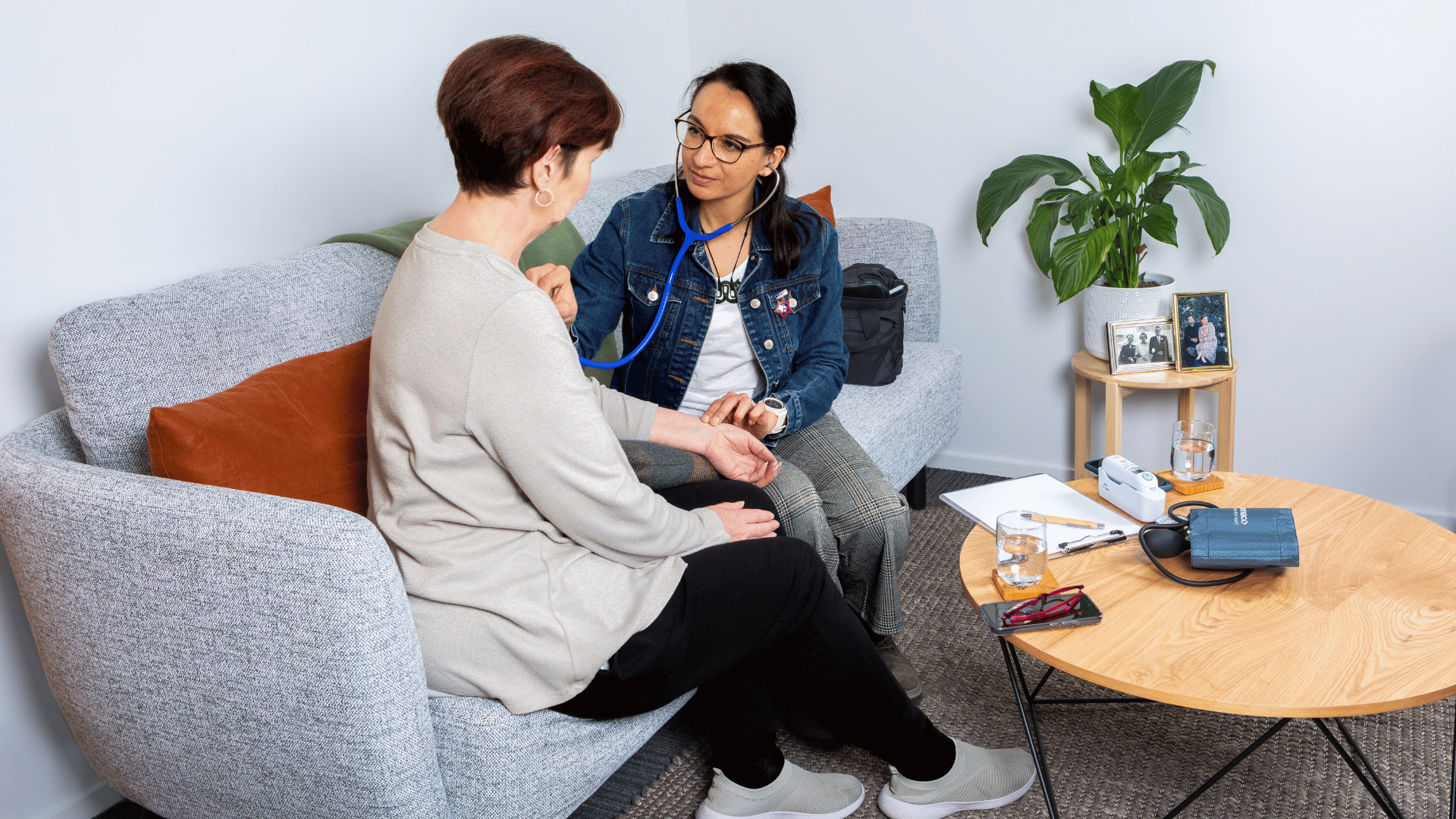
Registered Nurse Prescribing roles increase access to timely healthcare by enabling registered nurses to prescribe within a range of general and specialty health services. Registered Nurse Prescribers prescribe from a defined medicines list and work within a collaborative prescribing model. This means they practise as part of a healthcare team with access to medical practitioners and/or nurse practitioners for consultation, clinical oversight, and support with decision-making — read more to explore whether this pathway is suitable for you.
Graduate with a PGDipNurs and apply for registration with Te Kaunihere Tapuhi o Aotearoa | Nursing Council of New Zealand to work as a registered nurse prescriber, or credit these courses and continue onto our Master of Advanced Nursing (Nurse Practitioner) to become a mātanga tapuhi | nurse practitioner.
Requirements
To ensure that our learners have the necessary background and experience to succeed, admission to the Postgraduate Diploma in Nursing (Registered Nurse Prescriber) is based on your previous studies in a relevant nursing degree, and clinical experience as a registered nurse.
To enrol in the PGDipNurs, you must have:
- Completed one of the following:
- Qualified for an Aotearoa New Zealand nursing degree with a grade average of B or greater in your 300-level (or equivalent) courses; or
- Completed a recognised nursing qualification requiring at least three years full-time tertiary study with a grade average of B or greater; or
- Successfully completed a qualifying course prescribed by the Amo Matua, Te Kaupeka Oranga | Executive Dean of Health or delegate; or
- Been admitted with Academic Equivalent Standing as fulfilling these requirements.
- Completed a minimum of 2.5 years of relevant/eligible experience (full-time equivalence) prior to enrolling into NURS664. Relevant/eligible experience includes:
- A clinical/patient-facing role
- Completed in a setting relevant to the intended Registered Nurse Prescribing role/setting
- Ideally be a senior nurse (e.g. clinical nurse specialist) OR a role that includes taking a full history, undertaking a clinical examination, requesting and interpreting investigation results, considering diagnostic differentials, planning care, treatment/follow-up and referrals
- At least 1-year of RN practice must be in New Zealand or a similar healthcare context
- Intend to practise as a Registered Nurse Prescriber (Registered Nurse with Prescribing Authority) within a role and setting that aligns with the scope of practice and its limitations. This will occur within a collaborative team environment that includes access to a medical practitioner or nurse practitioner for clinical oversight, as well as ongoing mentorship and support to ensure safe and effective prescribing practice.
Your eligibility will be considered upon enrolment, with successful applicants approved as students by the Amo Matua Te Kaupeka Oranga | Executive Dean of Health or delegate.
Unsure about your suitability?
As part of our application process, your eligibility will be assessed by our nursing academic team to make sure that your academic and professional background meets the entry criteria. Unfortunately, our Tuihono UC | UC Online team cannot confirm your eligibility before your application is submitted, beyond referring you to the requirements above. We are happy to help answer any general questions you have about the programme or online learning, however. You can get in touch with us here.
For the full requirements, see the Regulations for the Postgraduate Diploma in Nursing (Nurse Prescriber) or use the admission requirements checker.
Clinical requirements
Your employer must agree to:
- Provide and support a practicum placement, including clinical release to enable completion of 150 supernumerary hours of supervised clinical practice. During this placement the registered nurse will work towards managing complete patient/client encounters, including assessment and examination, development of targeted diagnostic testing plans, consideration of differential diagnoses, diagnostic reasoning, treatment planning (including prescribing where appropriate), referral to other services, and monitoring and evaluation of treatment outcomes.
- Support mandatory attendance at the two-day study block for NURS664, which is in addition to the required practicum hours for this course, and six other in-person days required for HLTH662.
- Provide a named Clinical Supervisor (a senior medical practitioner or nurse practitioner) who will provide both informal supervision (clinical oversight and support) and formal supervision (case reviews and teaching). The Clinical Supervisor will also review submitted assignments, participate in onsite/online oral examinations, and validate achievement of the Registered Nurse Prescribing competencies.
- Ensure the practicum student has access to a medical practitioner or nurse practitioner during supervised clinical practice at all times (this oversight may be delegated to another suitably experienced medical practitioner or nurse practitioner).
- Ensure the practicum student has access to appropriate clinical resources and is able to request investigations and diagnostic tests, with appropriate clinical oversight and sign-off processes in place.
- Ensure the practicum student has appropriate access to read and document within clinical records, including medical notes where required.
Registered Nurse Prescribers are NOT authorised to diagnose and prescribe independently and must have access to a medical or nurse practitioner, at all times, to support decision making and/or there are clear escalation plans in place to maintain patient safety.
We will need confirmation of your ability to access suitable clinical experience. Learn more via Te Kaunihere Tapuhi o Aotearoa | Nursing Council of New Zealand.
Course requirements
All courses are compulsory, and HLTH661, HLTH662 and HLTH663 must be successfully completed with a grade average of at least B as prerequisites before studying NURS664. Learners must attend up to 8 days of in-person intensives at Te Whare Wānanga o Waitaha | University of Canterbury.
Structure
The Postgraduate Diploma in Nursing (Registered Nurse Prescriber) comprises of four NZQF level 8 postgraduate courses, including a minimum of 150 hours of clinical practicum.
It can be studied part-time over 2 years, subject to course availability. Learners must complete the PGDipNurs in the time frame stipulated by the Nursing Council of New Zealand to be eligible to apply for registration (48 months).
Time commitment
Part-time learners complete one course per semester, taking in course material, reflection time and writing assignments.
In-person requirements
Learners must attend a minimum of 150 hours of clinical practicum, and up to 8 days of in-person intensives at Te Whare Wānanga o Waitaha | University of Canterbury. Specific dates will be discussed during the enrolment process, but include:
- HLTH662: 6 on-site days (3 sets of 2-days)
- NURS664: 2 on-site days
Upcoming dates
View upcoming semester dates. Please note: clinical practicum requirements may extend over the summer break.
View course-specific dates
Each course has its own schedule for in-person intensive dates and assessments. Find the most up-to-date information via the UC Course Information System.
Careers and job opportunities
Registered Nurse Prescribers are not authorised to diagnose and prescribe independently outside of this collaborative model. They must have access to a medical practitioner or nurse practitioner to support clinical decision-making when required, and clear escalation pathways must be in place to maintain patient safety.
Registered Nurse Prescribing roles are suited to:
- The management of long-term/chronic health conditions and some specialty conditions where the clinical context is appropriate. Suitability will depend on patient acuity and complexity, the available model of supervision, and alignment with the Registered Nurse Prescriber medicines list.
- Providing contraceptive services.
- Assessing and managing some new presentations where:
- the diagnosis is common, minor, and/or an expected sequela of an existing chronic condition; or
- there is a single diagnostic test or investigation that confirms the diagnosis (for example, point-of-care testing for urinary tract infection, plain film imaging for limb fractures, or swabs for sexually transmitted infections or skin infections); or
- the risk associated with initiating treatment without a definitive diagnosis is low, and appropriate safety-netting advice and follow-up arrangements are provided.
AND
- The prescribing nurse has the required knowledge of the condition, including its pathophysiology, diagnostic criteria, evidence-based management, and treatment options.
- The patient’s acuity does not require immediate review by a medical practitioner or nurse practitioner.
- The patient does not have additional complexity that requires a more advanced or nuanced diagnostic assessment or treatment plan (in which case the patient should be reviewed by and/or discussed with a medical practitioner or nurse practitioner).
AND
- Where the medical practitioner or nurse practitioner is not immediately available on-site, clear escalation processes must be in place to ensure patients can be reviewed by, discussed with, or referred to an appropriate practitioner within a clinically appropriate timeframe.


What you'll study
You’ll study four NZQF level 8 postgraduate courses for the Postgraduate Diploma in Nursing (Registered Nurse Prescriber). When available, specific dates and assessment information can be found via UC's course information system.
Description
This course will facilitate learners to demonstrate an advanced knowledge of the pathological basis and clinical manifestations of disease processes. This provides the foundation for clinical decision making related to assessment findings, investigations, and evidence to inform interventions and disease management.
Learning Outcomes
On completion of the course, it is expected that learners will be able to:
- Critically analyse the pathophysiological process of disease and health alterations.
- Critical interpretation of symptoms and clinical manifestations.
- Critically analyse the contribution of social and cultural determinants of health in relation to pathophysiology and clinical manifestations.
Description
This course will facilitate learners to demonstrate an advanced knowledge of the pathological basis and clinical manifestations of disease processes. This provides the foundation for clinical decision making related to assessment findings, investigations, and evidence to inform interventions and disease management.
Learning Outcomes
On completion of the course, it is expected that learners will be able to:
- Critically analyse the pathophysiological process of disease and health alterations.
- Critical interpretation of symptoms and clinical manifestations.
- Critically analyse the contribution of social and cultural determinants of health in relation to pathophysiology and clinical manifestations.
Description
This course will enable and prepare learners to utilise advanced knowledge of health assessment and diagnostic reasoning to formulate differential diagnoses and evidence-based plans and interventions. Learners will conduct holistic assessments, identifying current health issues, incorporating history, physical assessment, lifestyle, psychosocial factors, risks and potential complications.
Learning Outcomes
On completion of the course, it is expected that learners will be able to:
- Critically apply advanced health assessment and diagnostic reasoning principles.
- Critically analyse clinical assessment findings to generate diagnoses and differential diagnoses.
- Synthesise evidence-based practice to develop a therapeutic management plan.
- Critically apply a bicultural partnership approach to working with health consumers and whānau.
Clinical Practice Requirements
It is required that you are actively engaged in clinical practice to be able to complete this course. You need to have access to patients under your nursing care that you can complete course requirements.
Mentor Requirements
The clinical mentor must be a GP, NP or Registrar. There is no set time commitment to spend with the mentor, but we would recommend at least 5 hours per week during the course. Whilst you can have more than one clinical mentor, it is best if you keep your circle small. Your clinical mentor is there to support your growth and development in advanced assessment and diagnostic reasoning including:
- Providing feedback regarding your advanced assessment and diagnostic reasoning skills (e.g. obtaining a clinically appropriate history of presenting illness (HPI), development of differential diagnoses, considerations around potential management).
Description
This course will enable and prepare learners to utilise advanced knowledge of health assessment and diagnostic reasoning to formulate differential diagnoses and evidence-based plans and interventions. Learners will conduct holistic assessments, identifying current health issues, incorporating history, physical assessment, lifestyle, psychosocial factors, risks and potential complications.
Learning Outcomes
On completion of the course, it is expected that learners will be able to:
- Critically apply advanced health assessment and diagnostic reasoning principles.
- Critically analyse clinical assessment findings to generate diagnoses and differential diagnoses.
- Synthesise evidence-based practice to develop a therapeutic management plan.
- Critically apply a bicultural partnership approach to working with health consumers and whānau.
Clinical Practice Requirements
It is required that you are actively engaged in clinical practice to be able to complete this course. You need to have access to patients under your nursing care that you can complete course requirements.
Mentor Requirements
The clinical mentor must be a GP, NP or Registrar. There is no set time commitment to spend with the mentor, but we would recommend at least 5 hours per week during the course. Whilst you can have more than one clinical mentor, it is best if you keep your circle small. Your clinical mentor is there to support your growth and development in advanced assessment and diagnostic reasoning including:
- Providing feedback regarding your advanced assessment and diagnostic reasoning skills (e.g. obtaining a clinically appropriate history of presenting illness (HPI), development of differential diagnoses, considerations around potential management).
Description
This course facilitates learners to develop advanced knowledge in pharmacokinetics, pharmacodynamics, and pharmacogenetics for clinical practice. Studying pharmacology will equip learners with the knowledge and skills necessary to make informed decisions, assess risks and collaborate effectively in relation to prescribing practice. This foundation is crucial for delivering high quality, patient centered care and optimising outcomes for consumers.
Learning Outcomes
On completion of the course, it is expected that learners will be able to:
- Critically review the principles of pharmacokinetics, pharmacodynamics and pharmacogenetics.
- Critically review indications and contraindications, effects, adverse effects, drug interactions and client|whānau education associated with the use of prescription, Rongoā, Pacific healing health practice, over-the-counter and complementary medicines/remedies, and devices.
- Critically analyse and apply evidence-based practice to pharmacological interventions.
- Critically apply principles of equity to pharmacological practice.
- Explain the regulatory framework for pharmacological and other therapies within the Aotearoa | New Zealand context.
Description
This course facilitates learners to develop advanced knowledge in pharmacokinetics, pharmacodynamics, and pharmacogenetics for clinical practice. Studying pharmacology will equip learners with the knowledge and skills necessary to make informed decisions, assess risks and collaborate effectively in relation to prescribing practice. This foundation is crucial for delivering high quality, patient centered care and optimising outcomes for consumers.
Learning Outcomes
On completion of the course, it is expected that learners will be able to:
- Critically review the principles of pharmacokinetics, pharmacodynamics and pharmacogenetics.
- Critically review indications and contraindications, effects, adverse effects, drug interactions and client|whānau education associated with the use of prescription, Rongoā, Pacific healing health practice, over-the-counter and complementary medicines/remedies, and devices.
- Critically analyse and apply evidence-based practice to pharmacological interventions.
- Critically apply principles of equity to pharmacological practice.
- Explain the regulatory framework for pharmacological and other therapies within the Aotearoa | New Zealand context.
Description
This course is for Registered Nurses who wish to become a Registered Nurse Prescriber with the Nursing Council of New Zealand | Te Kaunihera Tapuhi o Aotearoa. It includes theoretical and clinical components in an area of specialty practice within a collaborative team. Learners will focus on the application of evidence-based practice to inform prescribing decisions to meet the competencies for Registered Nurse prescribing practice.
Learning Outcomes
On completion of the course, it is expected that learners will be able to:
- Synthesise knowledge of advanced health assessment, pathophysiology and pharmacology in advanced clinical practice.
- Articulate and practice within the legal framework for Registered Nurse prescribing.
- Meets the Nursing Council of New Zealand (NCNZ) competencies for Registered Nurse.
Prerequisites: Advanced Pathophysiology (HLTH661), Advanced Health Assessment (HLTH662), and Advanced Pharmacology (HLTH663) with a grade average of at least B.
Description
This course is for Registered Nurses who wish to become a Registered Nurse Prescriber with the Nursing Council of New Zealand | Te Kaunihera Tapuhi o Aotearoa. It includes theoretical and clinical components in an area of specialty practice within a collaborative team. Learners will focus on the application of evidence-based practice to inform prescribing decisions to meet the competencies for Registered Nurse prescribing practice.
Learning Outcomes
On completion of the course, it is expected that learners will be able to:
- Synthesise knowledge of advanced health assessment, pathophysiology and pharmacology in advanced clinical practice.
- Articulate and practice within the legal framework for Registered Nurse prescribing.
- Meets the Nursing Council of New Zealand (NCNZ) competencies for Registered Nurse.
Prerequisites: Advanced Pathophysiology (HLTH661), Advanced Health Assessment (HLTH662), and Advanced Pharmacology (HLTH663) with a grade average of at least B.
Reviews
Curious about what studying online is really like? Here's what recent learners thought of our online nursing courses.
Meg
Advanced Pathophysiology
"I enjoyed the comprehensive learning. The depth of the topics that we covered were interesting, and I was able to further expand my knowledge."
Rex
Advanced Pathophysiology
"The course is awesome. I've learn a lot which I can use in my practice."
Anna
Advanced Health Assessment
"I loved how relevant this was to my workplace (in GP). I feel like I have gained so much confidence... I liked the onsite days and the face-to-face learning. It is a challenging paper, but it has definitely made me a better nurse."
Mike
Advanced Health Assessment
"I really enjoyed learning new concepts in my nursing practice. I am really excited to use these new skills."
Stacey
Advanced Health Assessment
"The practical nature of the course was really beneficial to my practice, I was able to apply knowledge and skills throughout which increased my confidence."
Our people
The Postgraduate Diploma in Nursing (Registered Nurse Prescriber) is coordinated by Senior Lecturer Melissa Hanses, with contributions from Nursing Clinical Coordinator Desma Christie, Associate Professor Cathy Andrew and other Te Whare Wānanga o Waitaha | University of Canterbury academics.

Melissa Hanses
Programme Coordinator, University of Canterbury
Melissa Hanses is a Senior Lecturer Above the Bar at Te Whare Wānanga o Waitaha | University of Canterbury (UC). She has over 25 years' of both clinical and teaching experience as a mātanga tapuhi | nurse practitioner.
Melissa’s clinical experience includes the areas of maternal special care/post-partum, neonatal special care, paediatric and adolescent healthcare, and urgent care across the lifespan. Melissa’s teaching focus is on post-graduate nursing education, specifically in the advanced practice nursing areas of RN prescribing and mātanga tapuhi | nurse practitioner pathways.
Desma Christie
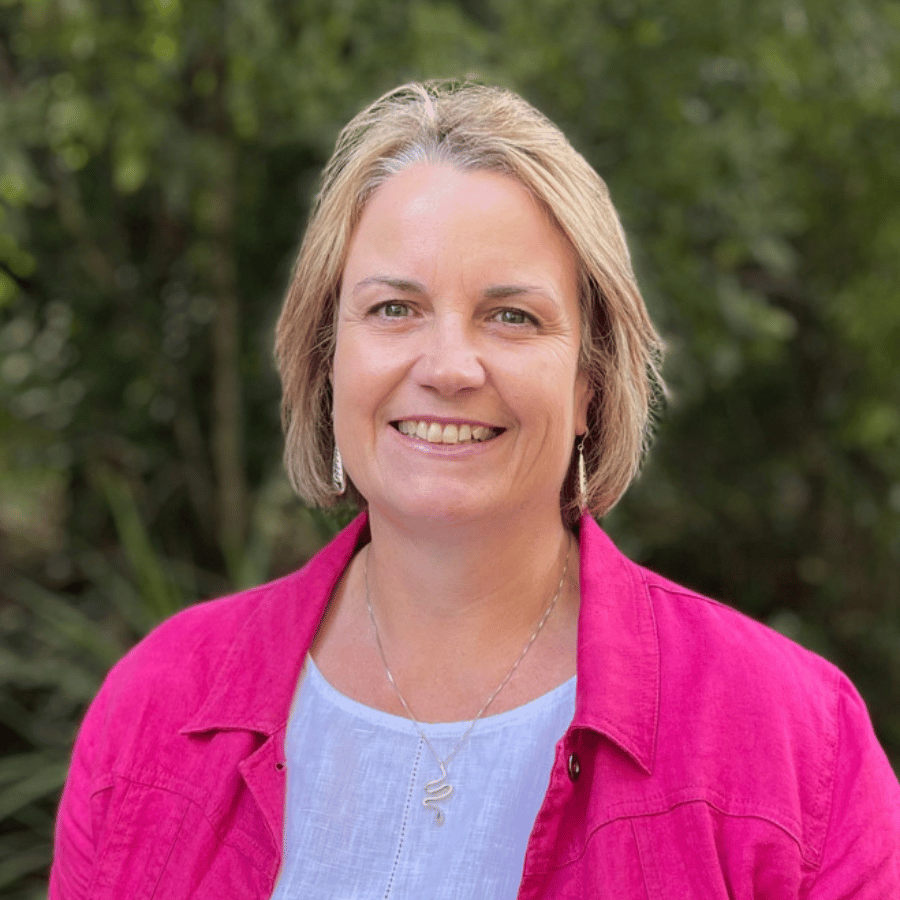
Nursing Clinical Coordinator and Senior Clinical Educator | University of Canterbury
Desma is a Senior Clinical Educator at Te Whare Wānanga o Waitaha | University of Canterbury. She has over 32 years' clinical and education experience as a registered nurse.
Desma has a background in acute neuro nursing and has been teaching science based subjects such physiology and pharmacology for undergraduate and postgraduate nursing education for the past 15 years.
Associate Professor Cathy Andrew
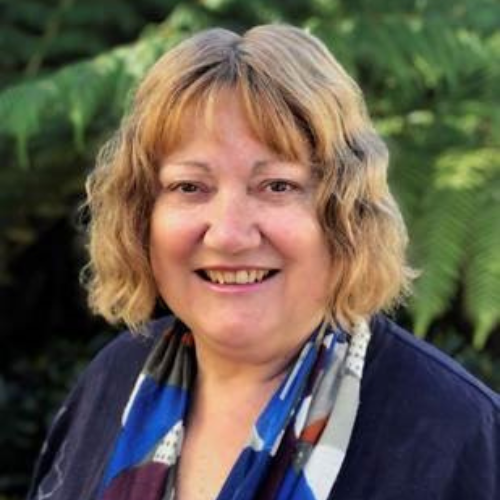
Executive Dean, Health, Director of Nursing, University of Canterbury
Cathy Andrews' nursing practice background is ICU and mental health. She has many years of experience in nursing and health educational leadership and management. Her research includes numerous collaborative projects between education and practice including curriculum development, evaluation and innovation in educational delivery.
Cathy's career has spanned New Zealand, Australia, the UK and the South Pacific. She has served on advisory groups, panels and committees for groups such as Health Quality and Safety, Nursing Council of NZ, Vanuatu Qualifications Authority, NZ Qualifications Authority and the National Nurse Leaders group.
Please note: our experts develop and present video content within their courses, but are not always the course facilitator. The course facilitator will engage with learners in the course forums, answer queries and mark assignments.
Stay updated
If you’re keen to know more, stay updated on when enrolments open or ask a question, please sign up for updates below.
Cap & minimum enrolment threshold: a minimum number of learners is needed for effective interaction and feedback, while a maximum cap of learners ensures high quality learning and support. If the minimum number of enrolments required for a course isn’t met, or the maximum cap is exceeded, learners will be given the option to defer their study or receive a refund.
FAQ
The Tuihono UC | UC Online Postgraduate Diploma in Nursing is a 2-year (part-time) programme designed to develop advanced knowledge, skills and competencies to become a registered nurse prescriber through Te Kaunihera Tapuhi o Aotearoa | Nursing Council of New Zealand.
The Tuihono UC | UC Online Postgraduate Diploma in Nursing is a 2-year (part-time) programme designed to develop advanced knowledge, skills and competencies to become a registered nurse prescriber through Te Kaunihera Tapuhi o Aotearoa | Nursing Council of New Zealand.
Bringing together the latest industry-informed learning applicable to your life and career, the Tuihono UC | UC Online Postgraduate Diploma in Nursing gives you the same quality education as other university programmes with the flexibility of online learning.
This includes 24/7 access, academic advice and technical support, giving you the support to study at your pace.
Bringing together the latest industry-informed learning applicable to your life and career, the Tuihono UC | UC Online Postgraduate Diploma in Nursing gives you the same quality education as other university programmes with the flexibility of online learning.
This includes 24/7 access, academic advice and technical support, giving you the support to study at your pace.
Graduates can apply to the Te Kaunihera Tapuhi o Aotearoa | Nursing Council of New Zealand to become a registered nurse prescriber in a designated area of practice. Nurse prescribers work as part of a collaborative team in primary care or specialty teams prescribing from a list of medicines for common and long-term conditions. They work with an authorised prescriber such as a Nurse Practitioner or medical doctor. Find out more here.

Graduates can apply to the Te Kaunihera Tapuhi o Aotearoa | Nursing Council of New Zealand to become a registered nurse prescriber in a designated area of practice. Nurse prescribers work as part of a collaborative team in primary care or specialty teams prescribing from a list of medicines for common and long-term conditions. They work with an authorised prescriber such as a Nurse Practitioner or medical doctor. Find out more here.
The overall cost of tuition fees per 30 point course based on the 2026 fee schedule:
- for domestic learners is $2,494* incl GST
Total programme investment for the 120 point programme based on the 2026 fee schedule:
- for domestic learners is $9,976* incl GST
*Please note that the fees are charged on a per year basis and the amount charged reflects the number of courses/points enrolled in the current year. These are based on the 2026 fee structure and subject to revision – you can learn more about the University of Canterbury’s Tuition fee structure here.
Student Services Levy costs
Each year university students around Aotearoa New Zealand are charged a Student Services Levy (SSL) in addition to their tuition fees. All the SSL money collected can only be used for the benefit of students - never for academic or administrative costs.
The SSL is automatically calculated on how many points you enrol in per academic year, capped at a maximum of 150 points. Tuihono UC | UC Online learners are charged a reduced SSL rate, which is 20% of the usual on-campus student levy. This is calculated as $2.06 per academic point in 2026. You can learn more about the Student Services Levy here, and more about UC Support Services here.
The overall cost of tuition fees per 30 point course based on the 2026 fee schedule:
- for domestic learners is $2,494* incl GST
Total programme investment for the 120 point programme based on the 2026 fee schedule:
- for domestic learners is $9,976* incl GST
*Please note that the fees are charged on a per year basis and the amount charged reflects the number of courses/points enrolled in the current year. These are based on the 2026 fee structure and subject to revision – you can learn more about the University of Canterbury’s Tuition fee structure here.
Student Services Levy costs
Each year university students around Aotearoa New Zealand are charged a Student Services Levy (SSL) in addition to their tuition fees. All the SSL money collected can only be used for the benefit of students - never for academic or administrative costs.
The SSL is automatically calculated on how many points you enrol in per academic year, capped at a maximum of 150 points. Tuihono UC | UC Online learners are charged a reduced SSL rate, which is 20% of the usual on-campus student levy. This is calculated as $2.06 per academic point in 2026. You can learn more about the Student Services Levy here, and more about UC Support Services here.
There are a range of options you can use to finance your study. We recommend a discussion with the postgraduate nursing education representative or team at your organisation to discuss your eligibility for health workforce funding and support.
Health New Zealand | Te Whatu Ora also offer registered nurse primary care scholarships. plus a database for other health scholarships.
There are a range of options you can use to finance your study. We recommend a discussion with the postgraduate nursing education representative or team at your organisation to discuss your eligibility for health workforce funding and support.
Health New Zealand | Te Whatu Ora also offer registered nurse primary care scholarships. plus a database for other health scholarships.
We offer a range of Tuihono UC | UC Online scholarships, and Health New Zealand | Te Whatu Ora also offer registered nurse primary care scholarships. plus a database for other health scholarships.
We also recommend a discussion with the postgraduate nursing education representative or team at your organisation to discuss your eligibility for health workforce funding and support.
In addition, a range of other organisations also fund scholarships nz, which you can explore:
We offer a range of Tuihono UC | UC Online scholarships, and Health New Zealand | Te Whatu Ora also offer registered nurse primary care scholarships. plus a database for other health scholarships.
We also recommend a discussion with the postgraduate nursing education representative or team at your organisation to discuss your eligibility for health workforce funding and support.
In addition, a range of other organisations also fund scholarships nz, which you can explore:
The programme can be completed in two years of part-time study.
The programme can be completed in two years of part-time study.
Studying online allows for flexibility in completing coursework, and Tuihono UC’s programme provides learners with the same quality education and resources as other university programmes.
Please note that this programme also requires some study days onsite at University of Canterbury, and clinical practicum requirements.
Studying online allows for flexibility in completing coursework, and Tuihono UC’s programme provides learners with the same quality education and resources as other university programmes.
Please note that this programme also requires some study days onsite at University of Canterbury, and clinical practicum requirements.
The programme is delivered with a majority of coursework online, using a range of technologies including video conferencing, online discussion forums, and interactive learning experiences.
There are some intensive study blocks where learning will be onsite at the University of Canterbury (Ilam and Manawa (city) Campus).
There are also a minimum of 150 mandatory hours of clinical practicum requirements as part of NURS664.
The programme is delivered with a majority of coursework online, using a range of technologies including video conferencing, online discussion forums, and interactive learning experiences.
There are some intensive study blocks where learning will be onsite at the University of Canterbury (Ilam and Manawa (city) Campus).
There are also a minimum of 150 mandatory hours of clinical practicum requirements as part of NURS664.
Learners have access to the same support services as on-campus students, including academic advising, technical support, and library resources. There are also great resources for both Canterbury based and remote learners at the UC RecCentre. Learn more here.
Learners also have the support of our Tuihono UC Learner Experience team.
Learners have access to the same support services as on-campus students, including academic advising, technical support, and library resources. There are also great resources for both Canterbury based and remote learners at the UC RecCentre. Learn more here.
Learners also have the support of our Tuihono UC Learner Experience team.
Applications are made online through our Tuihono UC | UC Online website – view open enrolments and/or expressions of interest for when enrolments open.
Applications are made online through our Tuihono UC | UC Online website – view open enrolments and/or expressions of interest for when enrolments open.
Whether you need advice finding the right course for you or support with the enrolment process, we’re here to help! Contact enrolment support for course information, technical help and enrolment support.
Whether you need advice finding the right course for you or support with the enrolment process, we’re here to help! Contact enrolment support for course information, technical help and enrolment support.
There are some intensive study blocks where learning will be synchronous. Learners are expected to be present and participate in the online learning and the intensive study blocks, as well as all clinical practicum requirements.
There are some intensive study blocks where learning will be synchronous. Learners are expected to be present and participate in the online learning and the intensive study blocks, as well as all clinical practicum requirements.
This degree equips you with all the competencies you need to apply for registration as a registered nurse prescriber with Te Kaunihere Tapuhi o Aotearoa | Nursing Council of New Zealand.
This degree equips you with all the competencies you need to apply for registration as a registered nurse prescriber with Te Kaunihere Tapuhi o Aotearoa | Nursing Council of New Zealand.
The Postgraduate Diploma in Nursing (Registered Nurse Prescriber) is a standalone professionally relevant qualification but is also a good pathway for further study.
If you complete the requirements for the Postgraduate Diploma in Nursing you may apply to continue onto the Tuihono UC | UC Online Master of Advanced Nursing (Nurse Practitioner). You may also apply to be admitted and credit points towards the on-campus Master of Health Sciences, or Master of Health Sciences Professional Practice at the discretion of the Amo Matua, Te Kaupeka Oranga | Executive Dean of Health or delegate. Read the full requirements in the UC general conditions for credit regulations.
The Postgraduate Diploma in Nursing (Registered Nurse Prescriber) is a standalone professionally relevant qualification but is also a good pathway for further study.
If you complete the requirements for the Postgraduate Diploma in Nursing you may apply to continue onto the Tuihono UC | UC Online Master of Advanced Nursing (Nurse Practitioner). You may also apply to be admitted and credit points towards the on-campus Master of Health Sciences, or Master of Health Sciences Professional Practice at the discretion of the Amo Matua, Te Kaupeka Oranga | Executive Dean of Health or delegate. Read the full requirements in the UC general conditions for credit regulations.
Yes, once you've successfully completed the postgraduate diploma, you can apply to be admitted and credit 120 points towards a relevant further qualification, such as our Tuihono UC | UC Online Master of Advanced Nursing (Nurse Practitioner) or on-campus Master of Health Sciences, or Master of Health Sciences Professional Practice at the discretion of the Amo Matua, Te Kaupeka Oranga | Executive Dean of Health or delegate.
Read the full requirements in the UC general conditions for credit regulations.
Yes, once you've successfully completed the postgraduate diploma, you can apply to be admitted and credit 120 points towards a relevant further qualification, such as our Tuihono UC | UC Online Master of Advanced Nursing (Nurse Practitioner) or on-campus Master of Health Sciences, or Master of Health Sciences Professional Practice at the discretion of the Amo Matua, Te Kaupeka Oranga | Executive Dean of Health or delegate.
Read the full requirements in the UC general conditions for credit regulations.

Subscribe to our newsletter.
Join our mailing list to receive the latest news and offers from Tuihono UC | UC Online.

